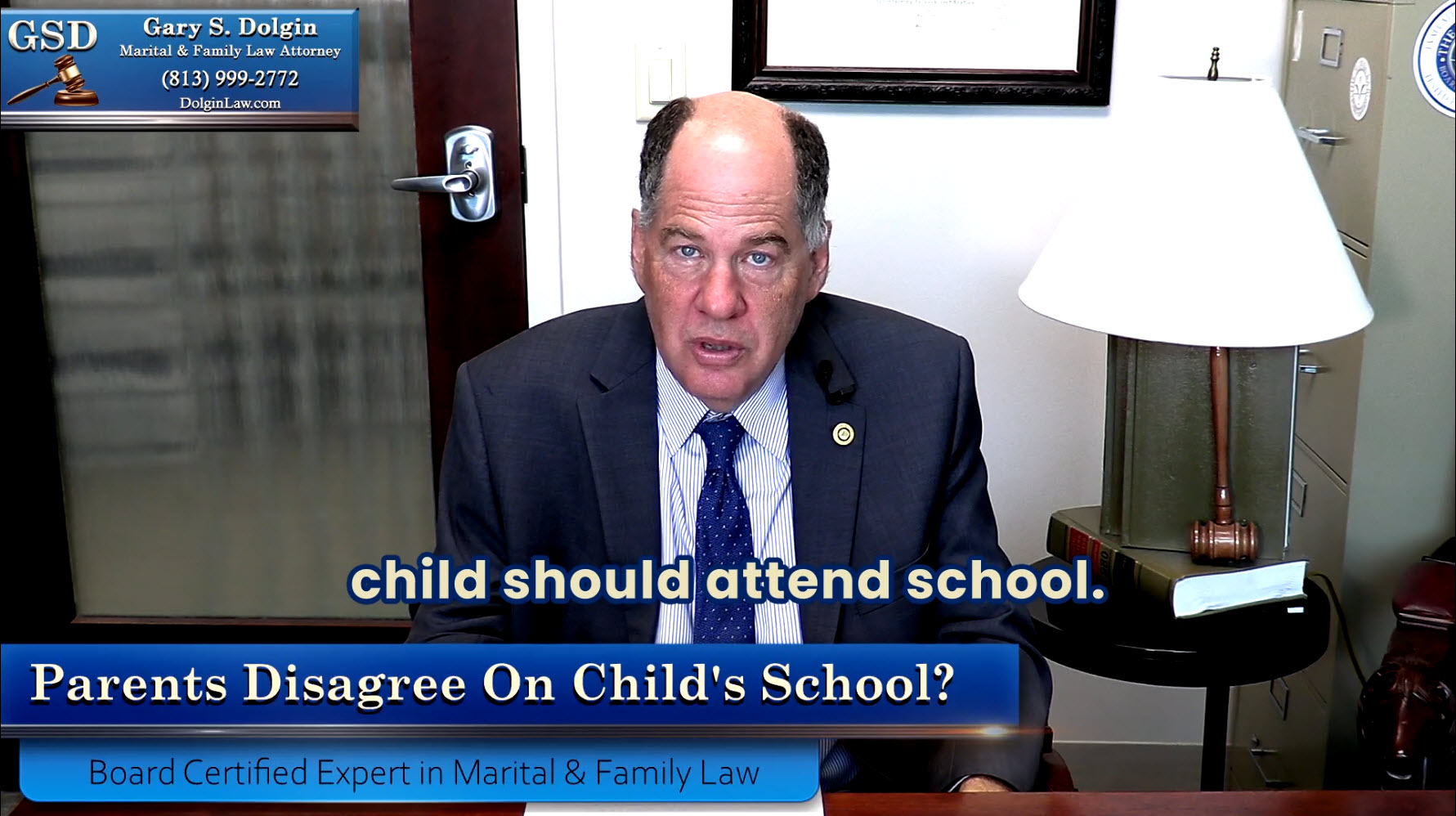
What Happens if Parents Disagree on Where Their Child Should Attend School in Florida?
When parents share custody of a child, disagreements sometimes arise regarding important decisions about the child’s future. One of the most common disputes involves education and where a child should attend school.
If you and your spouse or former spouse cannot agree on school selection, you may be wondering who ultimately gets to make that decision.
In Florida, educational decisions are often tied to parental responsibility and the best interests of the child. Understanding how courts handle these disputes can help parents better prepare when disagreements occur.
In this article, Gary Dolgin, a Board Certified Expert in Marital and Family Law with more than 35 years of experience, explains what happens when parents cannot agree on where their child should attend school and how Florida courts resolve these disputes.
What Is Shared Parental Responsibility in Florida?
Florida courts generally favor shared parental responsibility whenever possible.
Shared parental responsibility means that both parents are expected to participate in major decisions affecting their child’s life. This includes decisions involving:
- Education
- Healthcare
- Religious upbringing
- Extracurricular activities
- General welfare and development
The law encourages parents to communicate and work together when making important choices for their children.
Can One Parent Unilaterally Choose a School?
In most cases, no.
When parents have shared parental responsibility, neither parent automatically has the right to make major educational decisions without consulting the other parent.
School selection is typically considered a significant decision that requires discussion and cooperation between both parents.
When parents are able to reach an agreement, the decision-making process is usually straightforward. However, disputes can arise when parents have different opinions regarding what school is best for their child.
What Happens When Parents Cannot Agree?
When parents are unable to resolve a disagreement regarding school choice, the matter may ultimately be presented to the court.
Many parents mistakenly believe the judge will personally decide which school the child should attend. In reality, that is generally not how Florida courts handle these cases.
Instead, the court will determine which parent should have the authority to make the educational decision.
How Do Florida Courts Resolve School Choice Disputes?
Rather than selecting a specific school, a judge will typically decide whether one parent should be granted ultimate decision-making authority regarding educational matters.
This determination is based on the unique circumstances of the family and what the court believes serves the child’s best interests.
The court may evaluate factors such as:
- The child’s educational needs
- Each parent’s involvement in the child’s education
- Communication between the parents
- The child’s stability and continuity
- Any special educational circumstances
- The overall best interests of the child
The goal is to ensure that important educational decisions are made in a manner that best supports the child’s well-being and future success.
Understanding Ultimate Decision-Making Authority
Ultimate decision-making authority does not eliminate shared parental responsibility altogether.
Instead, it allows one parent to make the final decision when the parents cannot reach an agreement after reasonable efforts to communicate and cooperate.
This authority may be granted for educational decisions, medical decisions, or other specific areas where ongoing conflict exists.
Courts do not award ultimate decision-making authority lightly and carefully evaluate the circumstances before doing so.
The Best Interests of the Child Standard
In all child custody and parental responsibility matters, Florida courts focus on one primary consideration:
What is in the best interests of the child?
When deciding whether one parent should receive ultimate authority over educational decisions, judges evaluate the facts of each case and determine which arrangement will best serve the child’s needs.
The court’s objective is not to reward or punish either parent but rather to create a decision-making structure that benefits the child.
How Hillsborough County Courts Handle Educational Decision Disputes
While Florida family law applies throughout the state, local court experience can be valuable when navigating parental responsibility disputes.
Judges in Hillsborough County frequently handle cases involving:
- School choice disagreements
- Parenting plan disputes
- Shared parental responsibility conflicts
- Child custody modifications
- Educational decision-making issues
Understanding how these matters are typically presented and evaluated can help parents better prepare for court proceedings.
Who Decides Where a Child Goes to School in Florida?
When parents share parental responsibility but cannot agree on where their child should attend school, the court may become involved.
However, the judge will generally not select the school directly. Instead, the court may designate one parent to have ultimate decision-making authority regarding educational matters based upon the child’s best interests.
Every family situation is different, which is why obtaining experienced legal guidance can be important when disputes arise.
Florida School Choice and Child Custody FAQs
Question: What happens if divorced parents disagree about where their child goes to school?
Answer: If parents cannot agree on school selection, the dispute may be presented to the court. A judge may determine which parent should have ultimate decision-making authority regarding educational matters.
Question: Can one parent choose a child’s school without the other parent’s consent?
Answer: Generally, no. When parents share parental responsibility, major educational decisions typically require both parents to confer and attempt to reach an agreement.
Question: Will a judge decide which school my child attends?
Answer: Usually not. Florida courts generally do not select a specific school. Instead, the judge may grant one parent the authority to make educational decisions when disagreements occur.
Question: What is shared parental responsibility in Florida?
Answer: Shared parental responsibility means both parents are expected to participate in important decisions affecting their child’s education, healthcare, and overall welfare.
Question: What is ultimate decision-making authority?
Answer: Ultimate decision-making authority allows one parent to make the final decision on specific issues when the parents cannot reach an agreement despite reasonable efforts to cooperate.
Question: How does a court determine which parent gets decision-making authority?
Answer: The court evaluates numerous factors and focuses on what arrangement serves the best interests of the child.
Question: Can a parenting plan address educational decisions?
Answer: Yes. Parenting plans often contain provisions regarding parental responsibility and how major decisions concerning education will be handled.
Question: Should I hire an attorney for a school choice dispute?
Answer: Because educational disputes can impact parental rights and custody arrangements, obtaining legal guidance can help protect your interests and ensure your position is effectively presented.
Why Board Certification Matters in Child Custody Cases
Disputes involving children are often among the most important and emotionally challenging issues parents face.
Board Certification in Marital and Family Law represents the highest level of expertise recognized by The Florida Bar.
With more than 35 years of experience, Gary Dolgin has helped parents throughout Tampa and Hillsborough County navigate child custody disputes, parenting plans, parental responsibility issues, educational decision conflicts, child support matters, and other family law concerns.
At The Law Offices of Gary Dolgin, every case is handled with professionalism, compassion, and a commitment to achieving outcomes that protect both parents and children.
If you have questions about child custody, parental responsibility, school choice disputes, or any family law matter, obtaining experienced legal guidance early can make a significant difference.
The Law Offices of Gary Dolgin proudly serve clients throughout Tampa and Hillsborough County, providing trusted representation in family law matters.
To schedule a child custody consultation with Gary S. Dolgin, Attorney At Law, call (813) 999-2772 and it will be our pleasure to help you.
To see what past clients have to say about working with Gary Dolgin and to learn more about Florida family law, visit:
Tampa Child Custody Expert – Gary S. Dolgin
Google Business Page:
Divorce Attorney Near Me – Gary Dolgin
625 E. Twiggs St., Suite 101i
Tampa, Florida 33602
Facebook Page: Tampa Divorce Attorney – Gary Dolgin